How Is Fresh-Locked Goji Different From Traditionally Dried Goji?
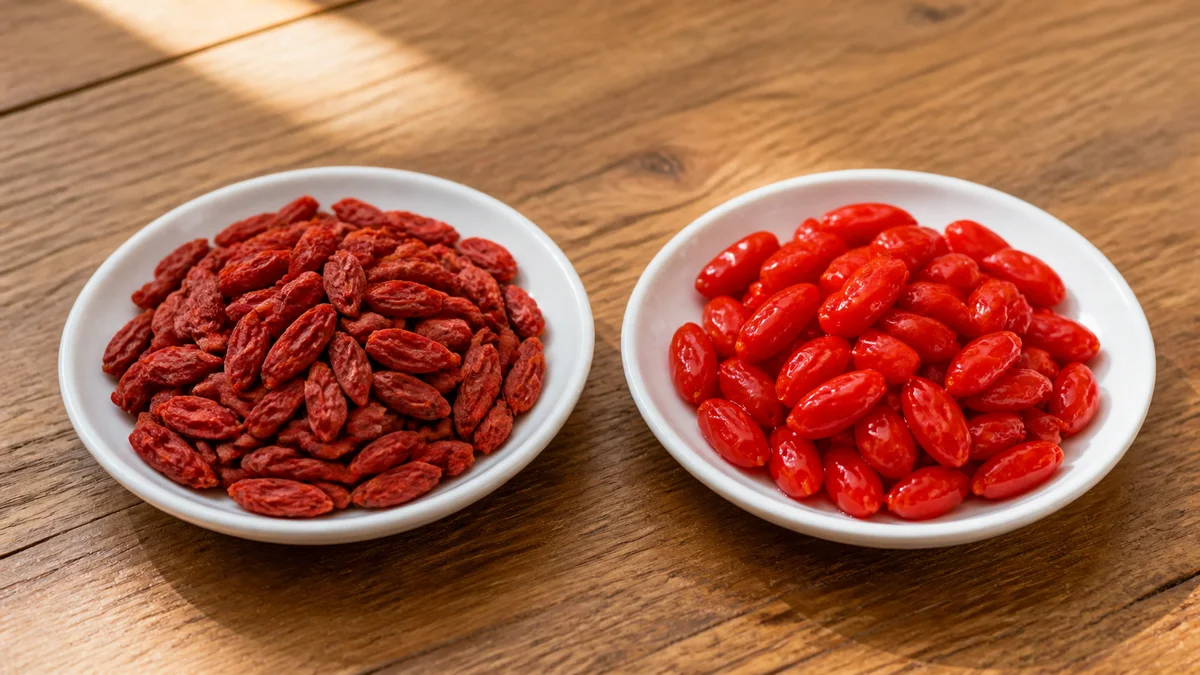
Many people, on first hearing "fresh-locked goji", wonder: how is it different from the dried goji they usually buy at the market? The answer lies in how it's processed after harvest.
How is traditionally dried goji made?
Traditionally dried goji is usually sun-dried or dried at high temperature for a long time to reach the dryness needed for long-term storage. Before use, cooks usually need to rinse it again, and sometimes soak it in water to soften the berries.
What is fresh-lock technology?
Fresh-locking is a process that treats goji berries at low temperature right after harvest, instead of prolonged sun-drying or high-temperature drying. The process has 4 steps: hand-picked ripe red berries → washed with mountain spring water → gently dried at low temperature → fresh-locked at -18°C on the same day. This keeps the berries close to fresh in softness, without needing sulfur fumigation or bleaching to preserve colour. This category is also known in the market as "soft-dried" goji.
Quick comparison table
| Fresh-locked goji | Traditionally dried goji | |
|---|---|---|
| How to use | Ready to eat, no rinsing needed | Usually needs rinsing/soaking before use |
| Taste & texture | Soft, naturally sweet | Drier, chewier |
| Process | Gently dried, then fresh-locked at -18°C on the day of harvest, no sulfur fumigation | Sun-dried or dried at high temperature |
| Packaging | 2-layer vacuum-sealed foil pouch with a desiccant sachet | Varies by manufacturer |
Which one should you choose?
If you want convenience – open and eat right away, brew tea quickly, no need to rinse again – fresh-locked goji suits you better. If you're used to dried goji for dishes that simmer for a long time (such as herbal soups or long-cooked stews), traditionally dried goji still has its place. Many families use both, depending on the purpose.
This article is for reference on food only, it is not medical advice and does not replace a doctor's guidance.
Author: Mekong HI team – an official importer of fresh-locked goji in Vietnam.