What Is Goji? Nutrition Value and How to Use It Correctly
Goji – also known as wolfberry or goji berry – is a small red-orange fruit that has been part of Eastern cuisine and wellness traditions for more than 40 centuries. So what exactly is goji, where does it grow, and why is China's Ningxia region considered its true home? Here's a fact-based overview to help you choose with confidence.
What kind of fruit is goji? Where is it famously grown?
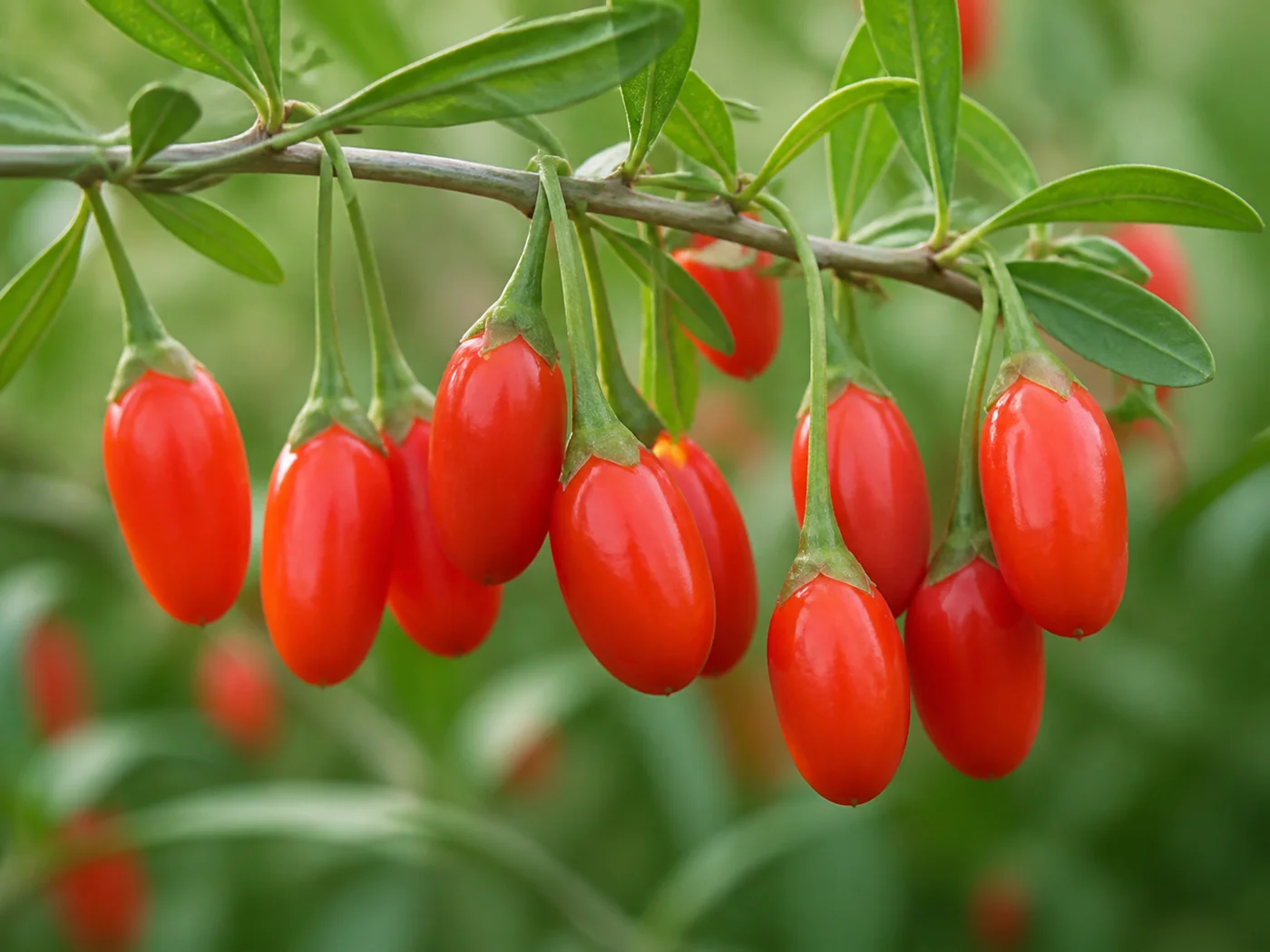
Goji is the fruit of a woody shrub in the nightshade family (Solanaceae), scientific name Lycium barbarum. A mature plant grows 1–3m tall, with small oblong berries 1–2cm long that ripen between June and October. Fresh berries have a soft skin and a mild sweet taste; once properly dried, they shrink to about a third of their original size while keeping their natural red-orange colour.
There are more than 80 species in the genus Lycium worldwide, but Lycium barbarum (red goji) – grown mainly in China's Ningxia region – is by far the most common for food use.
Ningxia is a small autonomous region in northwestern China, along the Yellow River – roughly half the size of Vietnam's Nghệ An province – yet it supplies a large share of the world's premium-grade goji. Four natural conditions there help the berries build up nutrients:
- Altitude of 1,100–1,500m, with intense daytime sun that builds natural sugars and cold nights that limit pest damage.
- Alkaline soil (pH 8.2–8.8) enriched by Yellow River silt, especially sodium and potassium, giving the fruit its distinctive lingering sweetness.
- A dry climate with under 200mm of rainfall a year, letting the berries dry naturally on the branch.
- About 3,000 sunshine hours a year – roughly 1.5 times more than goji grown in Hebei or Gansu.
Since 1995, Ningxia goji has held an official Chinese geographical indication – the same kind of protected status that Champagne holds in France, or that Phú Quốc fish sauce holds in Vietnam.
Nutrition value of goji
According to USDA FoodData Central and China's national standard GB/T 18672-2014, 100g of grade-1 dried goji typically contains around:
- Energy: 349 kcal
- Protein: 14.3g
- Carbohydrate: 77.1g – including about 46g natural sugars and 13g fibre
- Vitamin A (RAE): 26,822 IU
- Vitamin B2: 1.3mg
- Zinc: 1.3mg
- LBP polysaccharides (goji's signature active compound): 5–8g
Notably, goji contains all 8 essential amino acids plus 11 non-essential ones – unusually complete for a plant food. Its carotenoid content (zeaxanthin and beta-carotene) is also among the highest of common fruits.
Note: these figures are reference nutrition data from public sources, not medical advice. Goji is a nutritious food, not a medicine.
How much goji should you use per day?
Commonly referenced amounts by age group (general nutrition guidance, not a medical prescription):
| Group | Amount/day |
|---|---|
| Children 3–12 | 5–10 berries (about 3–5g), stirred into porridge or sweet soup |
| Teens 13–17 | 10–15 berries (about 5–8g) |
| Adults 18–60 | 15–25 berries (about 8–15g) |
| Adults over 60 | 15–20 berries (about 8–10g), best in porridge or soup for easier digestion |
| Pregnant/breastfeeding women, children under 12 months, people under medical treatment | Consult a doctor before use |
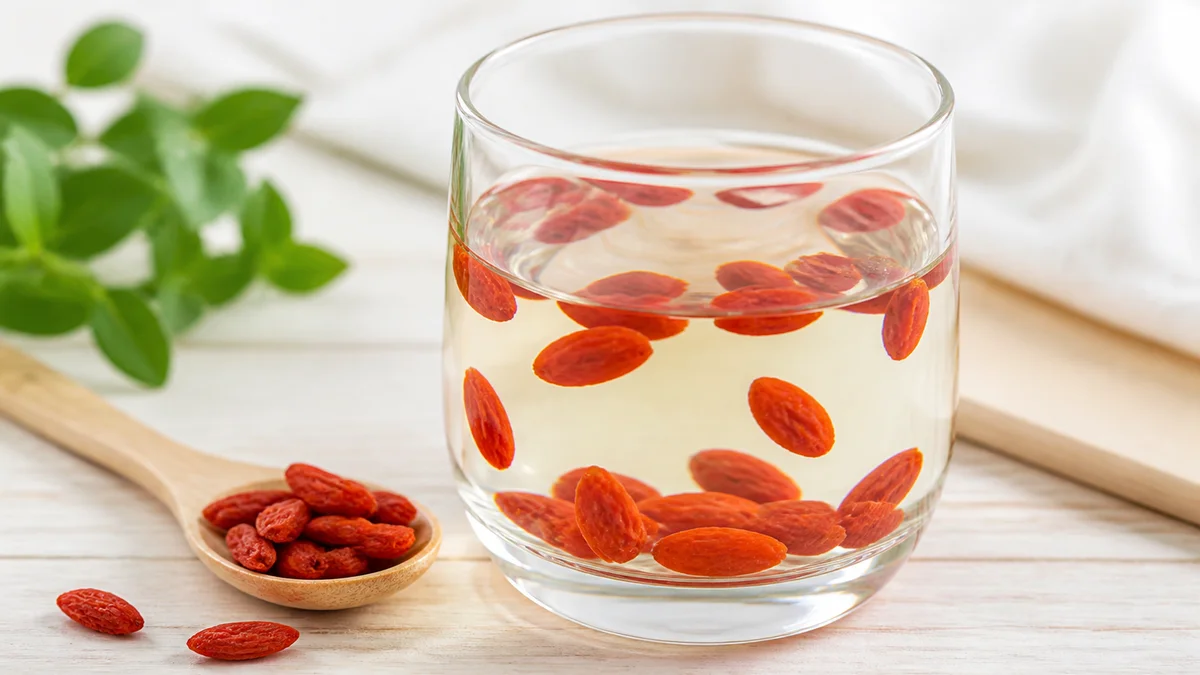
Goji can be brewed as tea with red dates or chrysanthemum, cooked into sweet soup, added to porridge or stews, or eaten on its own as a snack. Avoid overdoing it – continuous intake above 30g/day may cause indigestion or bloating due to its high polysaccharide content.
How to choose good, genuine Ningxia goji
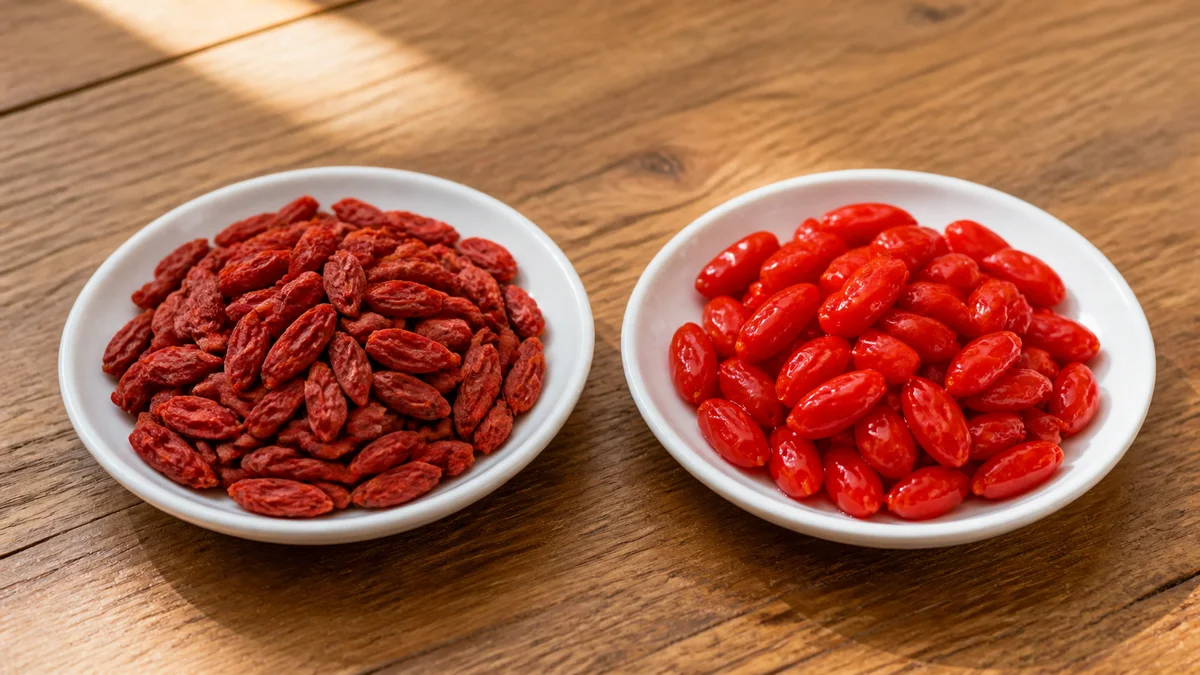
Premium-grade (grade-1) goji is generally large and evenly sized, with a natural (not artificially uniform) red-orange colour and few shrivelled berries. When buying, look for products with a clear food safety declaration and test report that states the raw material's origin.
Besides traditionally sun/heat-dried goji, the market now also has fresh-locked goji – processed at low temperature (-18°C) on the same day it's harvested instead of being dried at high heat. This keeps the berries soft and plump without needing sulfur to preserve colour the way some traditional methods do. See the full comparison in How is fresh-locked goji different from traditionally dried goji?.
This article is for reference on food only, it is not medical advice and does not replace a doctor's guidance.
Author: Mekong HI team – an official importer of fresh-locked goji in Vietnam.